For two people who plan to use a sauna most days of the week, the setup that holds up best is a 4×6 cabin or a 6-foot-diameter barrel sauna, built with a continuous-duty 4.5 to 6 kilowatt heater and at least 24 inches of bench per person. Smaller units work for occasional use but tend to feel cramped fast once a couple is in and out five or more times a week. Daily use also changes what matters in construction: ventilation, wood species, and heater duty rating carry more weight than they would for a sauna used twice a month.
Barrel, Cabin, or Corner Unit: Which Layout Suits Daily Use?
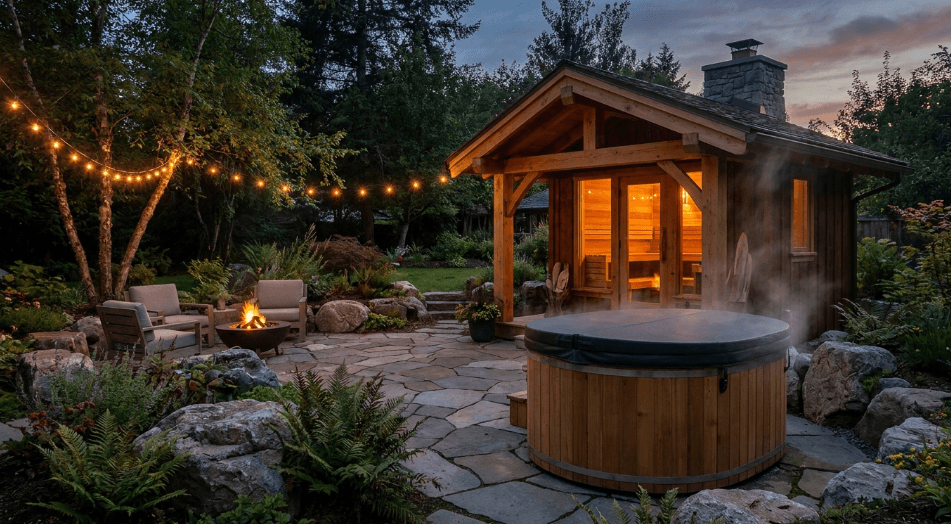
A 6-foot-diameter cedar barrel sauna seats two people comfortably on a single bench that runs the curve of the barrel, and the round shape sheds rain and snow well if it lives outside year-round. A square 4×6 cabin gives more usable floor space for stretching out and is easier to fit into a corner of a yard or a covered porch. A corner unit, built to tuck into an L-shaped footprint as small as 4×4, saves the most ground space but usually means single-tier bench seating only, which some daily users find limiting after a few months. For two people committed to daily sessions, the cabin or barrel format tends to age better than the smallest corner units, simply because there is more room to move without touching the walls or the heater guard.
How Different Is a Heater Built for Daily Use?
Heater sizing on paper looks the same whether a sauna runs twice a month or every night, but the internal build quality matters more under daily cycling. A heater rated for continuous residential duty uses heavier gauge elements and a more durable thermostat than a budget unit spec’d for occasional weekend use, and that difference shows up as a shorter lifespan on the cheaper option once it is heating up and cooling down three hundred-plus times a year. For a 4×6 cabin, 4.5 to 6 kilowatts is typically enough; going a size up, closer to 6 kilowatts, buys faster recovery time between back-to-back sessions if both people are not using the sauna at exactly the same time. Stone quality matters too, since undersized or poor-quality rocks degrade faster under daily heat cycling and need replacing sooner than a lighter-use setup would require.
What Does Daily Moisture Do to a Small Cabin?
Every sauna session pushes humidity into the wood, and a cabin used daily never gets as many dry days between sessions as one used weekly. Outdoor units handle this naturally, since the exterior wood and roof design are built to shed water and the whole structure dries in open air. An indoor small-space sauna needs help: a bathroom-grade exhaust fan run for twenty to thirty minutes after each session, or at minimum a cracked door and window, keeps moisture from settling into drywall and framing nearby. Skipping this step is the most common reason a daily-use indoor sauna develops a musty smell or soft wood within the first year, regardless of how well the cabin itself was built.
What Should Two Daily Users Budget For?
Beyond the sauna itself, daily use adds up in bench maintenance, towel and bench-liner turnover, and heater servicing sooner than occasional use would require. Comparing full specs side by side, including heater duty rating and bench dimensions rather than price alone, is worth doing before ordering; browsing SweatDecks’ lineup alongside other cedar barrel and cabin makers is a reasonable way to see how continuous-duty heater options and bench widths actually compare across similarly sized units. A sauna bought for two people who use it once a week and one bought for two people using it daily can look identical in a photo but differ meaningfully in the heater and wood grade underneath.
How Should Bench Layout Handle Two People at Once?
A single-tier bench running the full width of a 4×6 cabin or the curve of a 6-foot barrel gives two people side-by-side seating without one person’s shoulder brushing the other’s constantly, provided there is at least 24 inches per person as a starting point. Where ceiling height allows, a two-tier layout, upper bench for more heat and lower bench for a milder session, lets a couple use the same sauna at different intensity levels on nights when one person wants a longer, hotter sitting and the other does not. The aisle in front of the bench also matters more for daily use than occasional use, since two people getting in and out most days need enough clearance to pass each other without stepping over feet or ducking under a low ceiling line. A layout that looks fine in a showroom photo can feel tight once it is actually used every evening for months, which is why bench width and aisle space deserve as much attention as heater kilowatts when comparing floor plans.
What Does Regular Sauna Use Do Over Time?
Frequency is a meaningful variable in the sauna research, not just an incidental detail. A widely cited Finnish cohort study found that men who used a sauna four to seven times a week had lower rates of cardiovascular mortality than men who used one once a week, an association that held after adjusting for other risk factors. A broader Mayo Clinic Proceedings review summarized similar frequency-linked associations across multiple cohorts, and a systematic review of clinical sauna research reached comparable conclusions about regular use. None of this proves that daily sauna use changes any individual’s health outcome, and it is worth remembering these are population-level associations from mostly Finnish cohorts, not a guarantee, but it does support the idea that a setup built to survive daily use, not just occasional use, is the more sensible investment for two people planning to actually use it that often.
Frequently Asked Questions
What is the smallest sauna that comfortably fits two people daily? A 4×6 foot cabin or a 6-foot-diameter barrel sauna is the practical floor. Smaller units tend to put shoulders and knees too close together for sessions past ten minutes.
Does daily use require a bigger heater than occasional use? Not necessarily bigger, but it should be rated for continuous duty, since daily cycling wears elements faster than weekend-only use.
Should a two-person daily sauna be indoor or outdoor? Either works, but outdoor units shed daily moisture more naturally. Indoor cabins need an exhaust fan or cracked window after each session.
How much bench space does two-person daily use actually need? At least 24 inches of bench width per person on a single tier, or two tiers of roughly 20 inches each with sufficient ceiling height.
References
- Association between sauna bathing and fatal cardiovascular and all-cause mortality events, JAMA Internal Medicine, 2015
- Cardiovascular and Other Health Benefits of Sauna Bathing: A Review of the Evidence, Mayo Clinic Proceedings, 2018
- Clinical Effects of Regular Dry Sauna Bathing: A Systematic Review, Evidence-Based Complementary and Alternative Medicine, 2018